
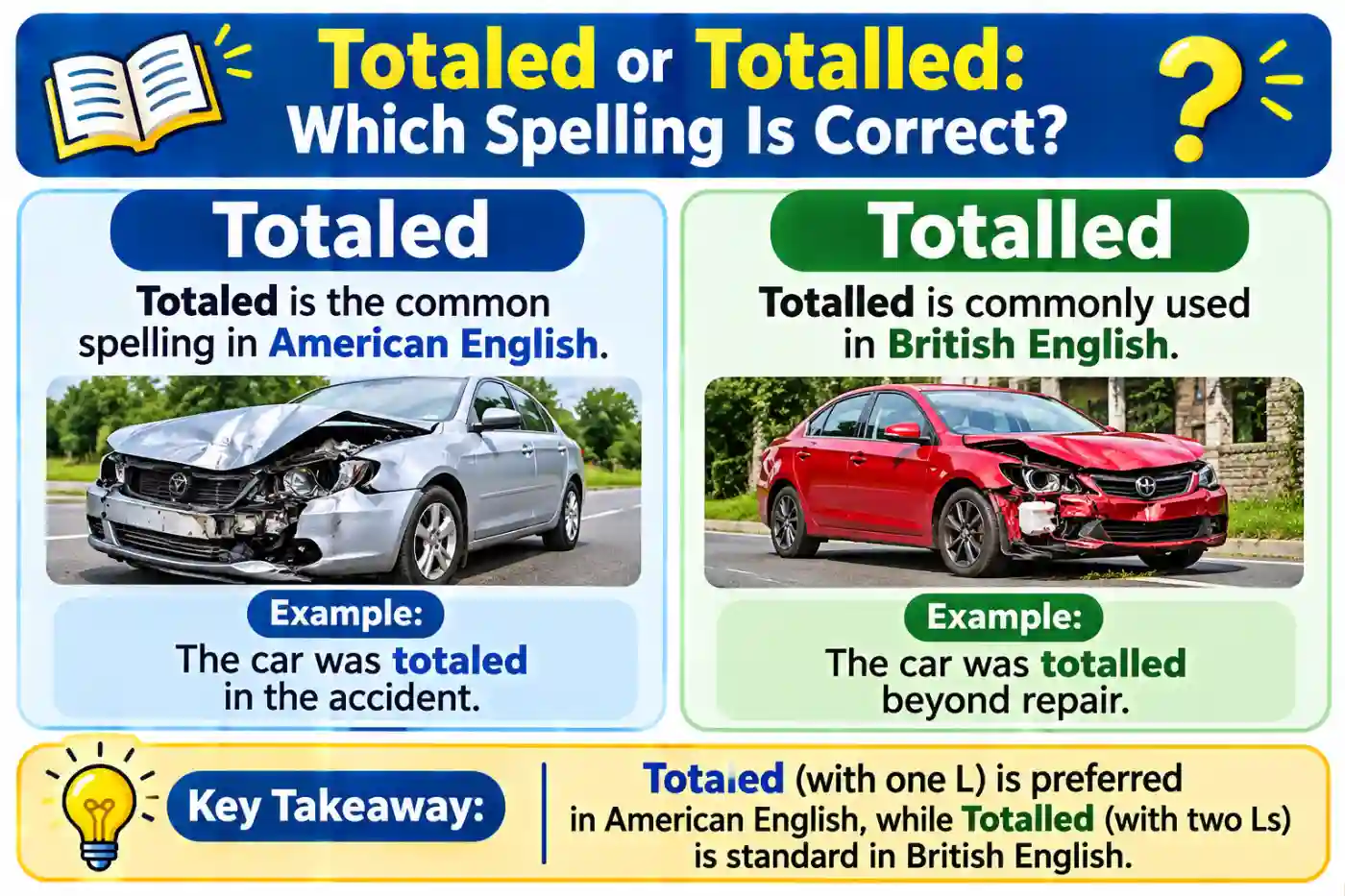
If you’re writing an email, preparing a report, or describing the final cost of a project, you may wonder whether totaled or totalled is the correct spelling. Both forms look familiar, and the difference comes down to regional spelling rules rather than meaning.
Totaled is the correct spelling in American English, while totalled is the preferred spelling in British English. Both words are the past tense and past participle of the verb total, meaning to add numbers together or reach a final amount. They can also describe a vehicle or object that has been damaged beyond economical repair.
The main difference is the extra letter L. American English uses one L in totaled, while British English uses two Ls in totalled.
If you’re writing for an American audience, choose totaled. This article explains both spellings, their meanings, grammar rules, regional differences, and examples to help you use them correctly.
Is It Totaled or Totalled?
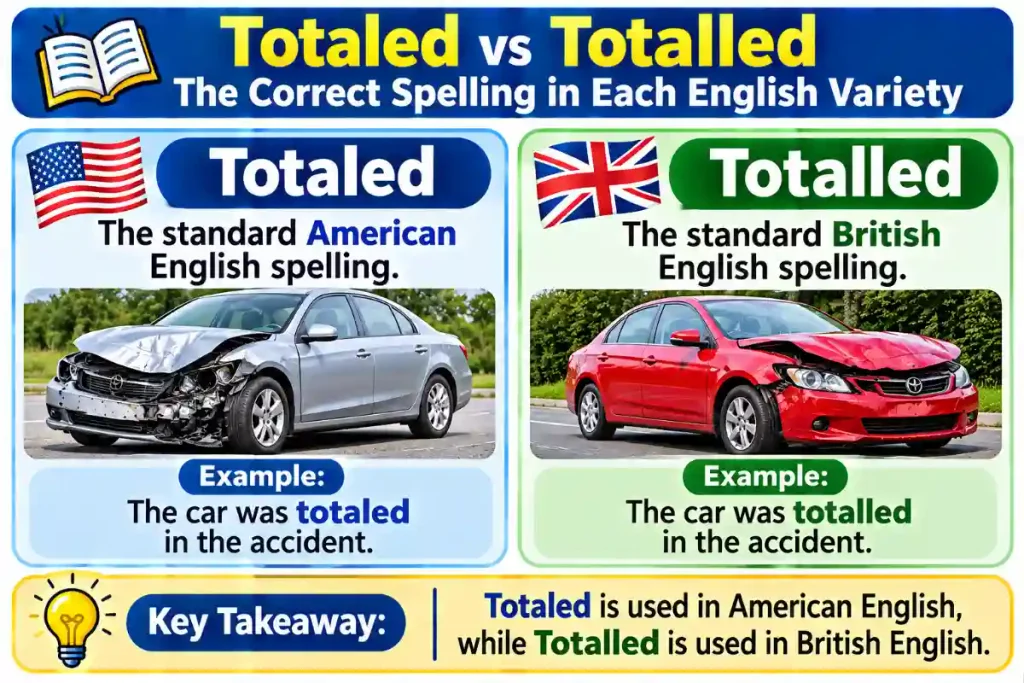
The correct spelling depends on which variety of English you’re using.
- Totaled: The standard American English spelling.
- Totalled: The standard British English spelling.
Both spellings are correct in their respective regions. Neither changes the word’s pronunciation or meaning. American English generally uses totaled because it follows a spelling convention that often keeps the final L of a verb unchanged when adding certain endings. British English commonly doubles the final L in these situations.
| Spelling | Language | Correct Usage |
|---|---|---|
| Totaled | American English | Correct |
| Totalled | British English | Correct |
| Totaling | American English | Correct |
| Totalling | British English | Correct |
| Total | Both | Correct |
Quick rule: If you’re writing an article, school assignment, business email, or report for readers in the United States, use totaled.
What Does Totaled Mean?
Totaled is the past tense and past participle of the verb total. It has two common meanings depending on the context.
1. Added Up to a Final Amount
The word can describe adding several numbers, expenses, or quantities to calculate a complete amount.
For example:
- The restaurant bill totaled $85.
- Our monthly expenses totaled $2,400.
- The donations totaled more than $10,000.
- The company’s sales totaled $500,000 last year.
In these examples, totaled means that the amounts added together reached a particular figure.
2. Damaged Beyond Economical Repair
In American English, totaled is also commonly used to describe a vehicle that an insurance company considers a total loss.
For example:
- The insurance company declared the car totaled.
- The storm damaged several vehicles, and two were totaled.
- Her truck was totaled in the accident.
When a car is totaled, repairing it may cost too much compared with its value, or the insurer may determine that it meets the applicable total-loss criteria.
The exact rules can vary by state and insurance policy.
Totaled as a Verb
Totaled functions as a verb when someone or something adds up an amount or reaches a final figure.
Examples:
- The expenses totaled $600.
- The final score totaled 95 points.
- The store’s daily sales totaled $4,000.
Totaled as a Past Participle
The word also appears with helping verbs such as has, have, and had.
Examples:
- The repair costs have totaled more than expected.
- The expenses had totaled $1,200 by Friday.
- The insurance company has totaled the vehicle.
It can also describe a condition when used with a linking verb:
- The car was totaled after the collision.
- Several vehicles were totaled during the storm.
Why Do Totaled and Totalled Have Different Spellings?
The difference between these spellings comes from the spelling conventions used in American and British English. Both versions come from the same base word, total. The disagreement appears when adding endings such as -ed and -ing.
The American English Rule
American English usually keeps the final L in the base word when adding -ed or -ing to words such as total.
Examples include:
- Total → Totaled
- Total → Totaling
- Travel → Traveled
- Travel → Traveling
- Cancel → Canceled
- Cancel → Canceling
This convention produces shorter spellings in many common words.
The British English Rule
British English commonly doubles the final L when adding these endings.
Examples include:
- Total → Totalled
- Total → Totalling
- Travel → Travelled
- Travel → Travelling
- Cancel → Cancelled
- Cancel → Cancelling
These forms are standard in British writing.
However, English spelling has exceptions, and not every word ending in L follows exactly the same pattern. It’s best to learn the common regional forms rather than assume that one rule covers every word.
Totaled vs Totalled: American English vs. British English
The biggest difference between totaled and totalled is regional preference. American English generally favors one L, while British English generally favors two.
| Feature | American English | British English |
|---|---|---|
| Past tense | Totaled | Totalled |
| Past participle | Totaled | Totalled |
| Present participle | Totaling | Totalling |
| Base verb | Total | Total |
| Meaning | Same | Same |
| Pronunciation | Same | Same |
Which Spelling Should Americans Use?
American writers should use totaled in most situations.
For example:
- The repair expenses totaled $3,000.
- My car was totaled last weekend.
- The donations totaled $15,000.
- The final costs have totaled more than we expected.
Using totalled in an American publication may look inconsistent with the spelling conventions used throughout the rest of the document.
Which Spelling Should British Writers Use?
British writers generally prefer totalled.
Examples:
- The expenses totalled £2,000.
- The vehicle was totalled after the accident.
- The company’s profits totalled £50,000.
- The repair costs have totalled more than the original estimate.
Both versions communicate the same information.
What About Canadian and Australian English?
Canadian and Australian English generally follow British-style spelling for this word, so totalled and totalling are commonly preferred. However, spelling practices can vary by publication and organization. Writers should follow the relevant style guide when preparing formal documents.
Totaled vs Totalled Examples in Real Sentences
Looking at complete sentences makes it easier to understand how each spelling works. The following examples use American English, so totaled is the preferred form.
| Context | Example Sentence |
|---|---|
| Shopping | My grocery expenses totaled $150 this week. |
| Business | The company’s annual sales totaled $2 million. |
| School | The students’ scores totaled 450 points. |
| Insurance | The insurance company declared my vehicle totaled. |
| Construction | The renovation expenses totaled $8,000. |
| Travel | Our hotel and transportation costs totaled $900. |
| Fundraising | The charity donations totaled $25,000. |
| Accounting | The outstanding payments totaled $3,500. |
| Workplace | The project expenses totaled less than the original budget. |
| Everyday life | The cost of our family dinner totaled $75. |
| Automotive | The mechanic explained that the damaged car was likely totaled. |
| Finance | The company’s losses totaled several thousand dollars. |
More Examples Using Totalled in British English
These examples demonstrate the British spelling.
- The household expenses totalled £1,500 last month.
- The company’s annual profits totalled £80,000.
- The repair costs totalled more than the vehicle’s value.
- The donations totalled £5,000 by the end of the event.
- The team’s points totalled 120 after the final round.
Remember that these sentences use British spelling. American writers should replace totalled with totaled.
How to Use Totaled Correctly in Different Contexts
The word totaled appears in everyday communication, business writing, financial reports, and insurance discussions. Understanding its context helps you use it naturally.
1. In Business Writing
Use totaled when describing combined sales, expenses, revenue, or other business figures.
Examples:
- The department’s operating expenses totaled $12,000.
- Our quarterly revenue totaled $250,000.
- The marketing campaign costs totaled less than the approved budget.
For professional reports, the word provides a clear and direct way to describe a calculated amount.
2. In Academic Writing
Students and researchers can use totaled when discussing scores, survey results, measurements, or numerical findings.
Examples:
- The survey responses totaled 350.
- The experiment’s recorded measurements totaled 75 units.
- The students’ final scores totaled 920 points.
Use the American spelling in assignments written for US schools and colleges.
3. In Emails
The word works well in professional emails when you need to communicate a final amount.
Example:
Hi Team,
I reviewed the project expenses and confirmed that the total costs totaled $4,500. This amount includes materials, transportation, and labor.
Please let me know if you need a breakdown of the individual expenses.
Best,
[Your Name]
A more natural alternative in this email would be: “The final project costs came to $4,500.” This avoids repeating total and totaled in the same sentence.
4. In Insurance and Automotive Discussions
In the United States, totaled is especially common when discussing damaged vehicles.
Examples:
- My insurance company said the car was totaled.
- The adjuster determined that the vehicle was a total loss.
- The repair estimate was high enough for the insurer to declare the car totaled.
In this context, totaled is informal but widely understood.
5. In Everyday Conversation
You can also use the word in casual conversations about money, expenses, or quantities.
Examples:
- The groceries totaled about $100.
- Our restaurant bill totaled $60.
- The tickets and snacks totaled $85.
It is a straightforward word that works in both casual and professional communication.

Totaled vs Totaling: What’s the Difference?
Totaled and totaling are different grammatical forms of the same verb.
- Totaled: Past tense and past participle.
- Totaling: Present participle and gerund.
American English uses one L in both forms.
| Word | Grammar | Example |
|---|---|---|
| Total | Base verb | We total the expenses. |
| Totaled | Past tense | We totaled the expenses yesterday. |
| Totaled | Past participle | We have totaled the expenses. |
| Totaling | Present participle | We are totaling the expenses. |
Examples:
- The expenses totaled $500 last month.
- The accountant is totaling the invoices.
- We have totaled all the receipts.
- Totaling the costs took several minutes.
British English uses totalled and totalling instead.
Totaled vs Total Loss: What’s the Difference?
Although these expressions are related, they do not serve exactly the same grammatical purpose. Totaled is a verb form or participial adjective, while total loss is a noun phrase.
| Expression | Part of Speech | Meaning |
|---|---|---|
| Totaled | Verb or participial adjective | Added up or declared a complete loss |
| Total loss | Noun phrase | A situation in which an item is considered a complete loss |
Examples:
- The insurance company totaled the car.
- The car was declared a total loss.
- The vehicle suffered damage that resulted in a total loss.
Use totaled when describing the action or condition. Use total loss when naming the outcome.
Totaled vs Damaged: What’s the Difference?
These words are related in automotive discussions, but they have different meanings. Damaged means something has been harmed or broken. Totaled usually means a vehicle has sustained enough damage to be considered a total loss under the applicable insurance criteria.
| Word | Meaning | Example |
|---|---|---|
| Damaged | Harmed or broken | The car was damaged in the storm. |
| Totaled | Declared a total loss | The insurance company totaled the car. |
| Repaired | Fixed or restored | The damaged car was repaired. |
| Wrecked | Seriously damaged or destroyed | The vehicle was wrecked in the collision. |
A damaged car is not automatically totaled. Some vehicles can be repaired and safely returned to the road.
Common Mistakes When Using Totaled or Totalled
Writers sometimes confuse these spellings because both appear in English-language publications. Here are the most common mistakes and how to correct them.
1. Using British Spelling in American Writing
Incorrect for standard American English:
- The repair costs totalled $2,000.
- The donations totalled $5,000.
Correct American English:
- The repair costs totaled $2,000.
- The donations totaled $5,000.
The British forms are not universally incorrect. They simply do not match standard American spelling.
2. Using the Wrong Present Participle
American English uses totaling, not totalling, in standard US spelling.
Incorrect for American English:
– The accountant is totalling the expenses.
Correct:
– The accountant is totaling the expenses.
3. Confusing Totaled With Total
Total is the base form of the verb, while totaled describes a completed action.
Incorrect:
– Yesterday, the expenses total $400.
Correct:
– Yesterday, the expenses totaled $400.
The past-tense form is necessary because the sentence refers to a completed action in the past.
4. Using Totaled When Totaling Is Needed
Choose the form that matches the sentence’s tense and structure.
Incorrect:
– We are totaled the expenses now.
Correct:
– We are totaling the expenses now.
The phrase are totaling describes an action happening at the moment.
5. Repeating the Same Word Unnecessarily
Although totaled is grammatically correct, repeating it alongside related words can make a sentence awkward.
Awkward:
– The total amount totaled $500 in total.
Better:
– The final amount was $500.
Clear writing often depends on choosing the simplest expression.
What Are Some Alternatives to Totaled?
Depending on your sentence, several words and phrases can replace totaled. However, not every alternative has exactly the same meaning. Some describe adding numbers, while others describe a final amount or a damaged vehicle.
Alternatives for Adding Up Numbers
| Alternative | Meaning | Example |
|---|---|---|
| Added up | Combined numbers | The expenses added up to $500. |
| Summed | Calculated a total | The values summed to 100. |
| Amounted to | Reached a particular figure | The costs amounted to $2,000. |
| Came to | Reached a final amount | The bill came to $75. |
| Reached | Achieved a numerical amount | The donations reached $10,000. |
| Equaled | Had the same numerical value | The expenses equaled $800. |
| Combined to | Produced a result together | The payments combined to $1,500. |
| Accumulated to | Built up to a particular amount | The savings accumulated to $5,000. |
Alternatives for a Damaged Vehicle
| Alternative | Meaning | Example |
|---|---|---|
| Declared a total loss | Officially classified as a total loss | The insurer declared the car a total loss. |
| Written off | Considered uneconomical to repair | The vehicle was written off. |
| Severely damaged | Suffered major damage | The car was severely damaged. |
| Wrecked | Seriously damaged | The vehicle was wrecked in the accident. |
| Beyond repair | Cannot reasonably be repaired | The old truck was beyond repair. |
Important: These alternatives are context-dependent. For example, added up works for expenses, but it does not replace totaled naturally when describing an insurance decision about a vehicle.
What Is the Difference Between Total, Totaled, and Totaling?
These three forms come from the same verb but serve different grammatical functions.
| Form | Usage | Example |
|---|---|---|
| Total | Base form | We total the expenses. |
| Totaled | Past tense | We totaled the expenses yesterday. |
| Totaled | Past participle | We have totaled the expenses. |
| Totaling | Present participle | We are totaling the expenses. |
Total
Use total when describing a general action, instruction, or present-tense statement.
Examples:
- Please total the receipts.
- I total the expenses every Friday.
- The amounts total $300.
Totaled
Use totaled for completed actions in American English.
Examples:
- The expenses totaled $300.
- We totaled the sales yesterday.
- The insurance company totaled the vehicle.
Totaling
Use totaling for ongoing actions or when the verb functions as a gerund.
Examples:
- She is totaling the receipts.
- Totaling the expenses takes time.
- The accountant is totaling the monthly payments.

How to Remember the Correct American Spelling
If you often confuse totaled and totalled, a few simple tips can help.
- Remember the US spelling: American English uses one L in totaled.
- Connect the spelling to totaling: The American forms are totaled and totaling.
- Watch for regional differences: British English commonly uses totalled and totalling.
- Keep your writing consistent: Avoid switching between American and British spelling in the same document.
- Check your audience: Use totaled for US readers and follow the appropriate regional style guide for international publications.
A useful memory trick is to remember that American English prefers one L in totaled, while British English generally doubles it.
Conclusion
The choice between totaled or totalled depends on your audience and the variety of English you’re writing in. Both spellings are correct, but they follow different regional conventions.
For American English, use totaled with one L. It is the correct form when describing a completed calculation, combined expenses, or a vehicle declared a total loss. British English generally prefers totalled with two Ls.
The same spelling difference applies to the present participle: Americans write totaling, while British writers commonly use totalling. Remembering this simple regional distinction will help you avoid spelling mistakes and keep your writing consistent. If your readers are primarily in the United States, totaled is the spelling to choose.
Frequently Asked Questions
Is totaled or totalled correct in American English?
Totaled is correct in standard American English. The spelling totalled is generally used in British English and other varieties that follow British spelling conventions.
Is totalled spelled correctly in British English?
Yes, totalled is the standard British English spelling. It has the same meaning as the American form totaled.
How do Americans spell totaling?
Americans spell the present participle totaling, with one L. British English generally uses totalling, with two Ls.
What does totaled mean when referring to a car?
When referring to a car, totaled means an insurance company has classified the vehicle as a total loss. This usually happens when the vehicle meets the applicable damage or repair-cost criteria.
Is totaled a past-tense verb?
Yes, totaled is the simple past tense and past participle of total in American English. For example, “The expenses totaled $500 yesterday.”
What is another word for totaled?
For numerical amounts, alternatives include added up, summed, amounted to, and came to. For a damaged vehicle, you can use declared a total loss or written off, depending on the context.
Which is correct, totaled or totalled in the United States?
Totaled is the preferred American spelling. If you’re writing for a US audience, use totaled and totaling to maintain consistent American English.
1 thought on “Totaled or Totalled: Which Spelling Is Correct?”